Anyone involved in studying primitive skills and living history knows that life was anything but simple and complex tasks require a lot of attention to detail.
Here is a link to an interesting article.

Forest Knights School of Bushcraft and Wilderness Skills.


 Sadly no photos to share for child protection reasons.
Beth Senior minion first class practising her feather sticks.
Bird catches a fish using bait in an intelligent wayBird catches a fish using bait in an intelligent way #Bird #Amazing #intelligent #Fish #bait #BVCVisit us www.BVCNetwork.com
Posted by BVC Network on Friday, 2 May 2014
 |
| Stihl MS261 Chainsaw |
 |
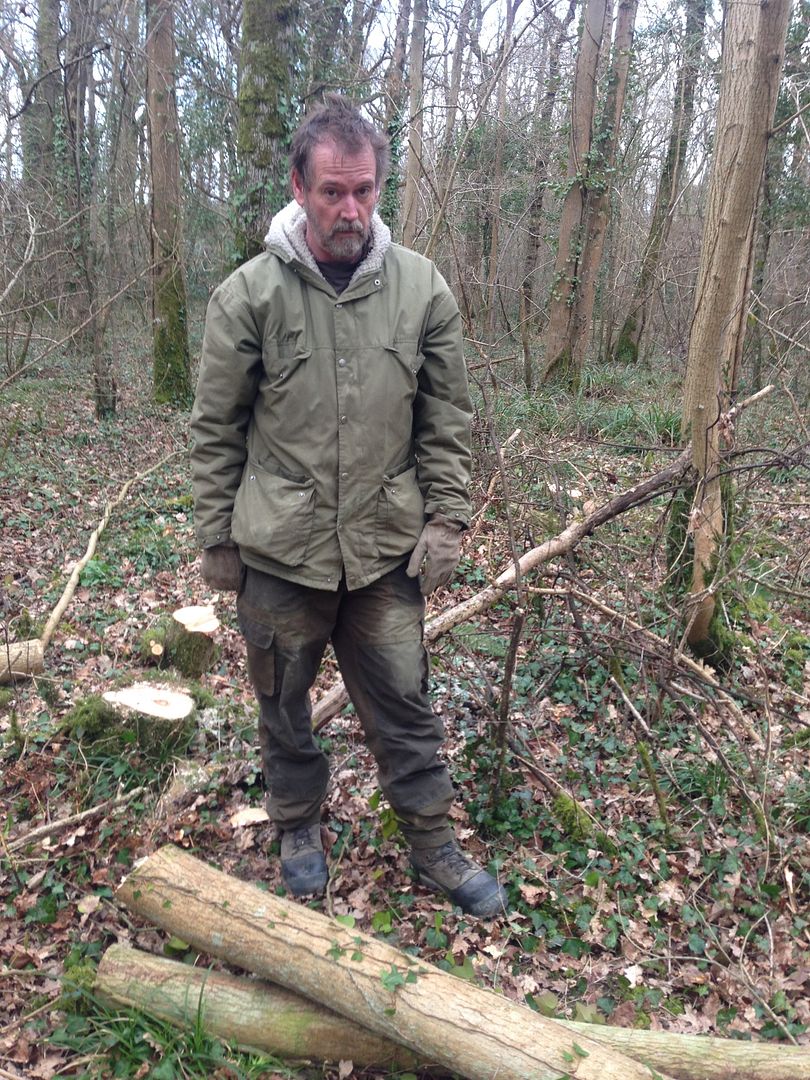
| David contemplating carrying the logs out the woods. |


Why is Forest Knights tag line Wilderness, Wildlife and Warrior Arts?
Forest Knights was asked to travel to Cheltenham to teach a group of 20 young people self defence.
We feel that having a good knowledge of self defence principles buildings self confidence and enables young people to make wiser choices about the people they associate with etc. This knowledge gives them sense of pride and self control.
Knowing when to react and how to deal with a potentially life threatening situation is an essential life skill, the ability to defend your self not only enhances your self worth but gives you a sense of responsibility. All power is a double edged sword and the ability to cause discomfort to others must be used wisely.
The course was structured to focus on the principles of movement timing and balance. It was important to instil a high moral compass to ensure that the young people understand that using the skills taught were for a very limited number of situations, 99.99% of the time it is wrong to harm anyone. Much better to walk away and avoid conflict. If someone is being abusive and a bully allow them their space and maybe over time you may show them that they were wrong. Lead by example and try to be a positive influence on those around you. If you are being robbed and you are certain that the thief is only interested in your possessions then let them have them. All objects can be replaced. Phones can be blocked and traced, your photos recovered from the cloud. Hardly worth a potential conflict for a phone you're likely to upgrade soon.
In our experience the only time it is right to fight is to protect yourself or those you care for from physical harm. Being a pain in the rear is not sufficient a reason to harm someone and will undoubtedly cause the authorities to take a very dim view of your behaviour. In other words you're the one likely to end up with a criminal record. Bye bye DBS and your career choices.
So now you have considered when it's necessary to act you are free from making that decision when the time comes. Now when a person invades your personal space you can move instantly from a passive response to actively defending yourself.
Once the decision is made there is no turning back. There is little middle ground in a real life threatening situation. The real world is an ugly place and violence is painful and brutal. It is much more productive spending 30 years learning to paint than 30 years practising martial arts.
However should you need those skills that 1 minute of time will be the 1 minute that defines your future. Act swiftly and decisively. Keep your techniques simple and effective. Forget the movies. In real life when you're tired and afraid perfection goes out of the window.
We worked with the young people on the Principle of Move Pain Go.
Move.
Avoidance. Move into safe space away from the threat. This can be away from the attacker or in close and personal. We worked on how to avoid getting hit by movement of the whole body especially the feet.
Pain.
All counters should give the attacker or attackers some form of stimulus to engage their brain. To interrupt their flow and create doubt. This will give you the time and space to go. Only do what it necessary and keep it simple. Economical violence.
Go
The next and most important part is to leave at the earliest opportunity. Once you have disabled your attacker and created space to move then go. Get away from the conflict and seek help from the emergency services or a responsible adult. Never wait for applause or support. Move on with your life do not give that minute any more power over you than necessary. Once you are safe you can call the police and report the incident.
The young people really enjoyed the various situations, we had them working hard sparring with plastic bottles to defending against multiple attackers. There was little need to give them specific techniques for they would be unlikely to remember then in 6 months in a pressure situation. However we worked on simple movement that began to develop muscle memory and a heightened situational awareness. Getting them to read a situation before it becomes a crisis is far better.
Prevention is better than cure.
Once they stopped falling over their own feet we could add a few extra tools to their armoury. How to punch and block effectively using the whole body. Understanding that their likely opponents may well have studied mixed martial arts and try to take them to the ground. We worked on simple counters.
To finish we had a question and answer session with the young people discussing the issues they faced and feared and how we could develop stratagems to avoid problems in the future.
As always we learn as much from our students as they learn from us and it was a privilege to help them feel a little safer in their everyday lives. Whilst the likelihood of facing a potential abduction is low understanding that you never get into the car is important. Fight tooth and nail to avoid getting into the vehicle make yourself too inconvenient a target as possible. Anything to get you noticed and slow an attacker down and give you a chance to flee. Once in a car the search area for the authorities looking for you increases dramatically and your changes of escape are reduced.
Forest Knights believe knowledge is power and with the application of knowledge and a positive attitude then any situation should be managable. Having a sound knowledge of Bushcraft and Survival is a great foundation but to be truely prepared one must also have a solid understanding of human behaviour and be able act effectively in a crisis.
Forest Knights instructors run training courses in self defence, conflict resolution and can provide training solutions for all your travel needs into hostile environments.
Contact us for bespoke courses to meet your organisations needs.
 |
| Joel removing the surface rust. |
 |
| Checking the motor. |
 |
| Bandaging a twisted ankle. |
 |
| CPR practice. |
 In the morning it's always good to benchmark the skills of students with a nice simple casualty. In this case Beth is a walker that has slipped on the wet grass and inadvertently twisted her ankle.

 There was a crush injury whilst someone was trying to lift a heavy kayak onto a high rack and another woman running for help had fallen over and gashed her scalp.


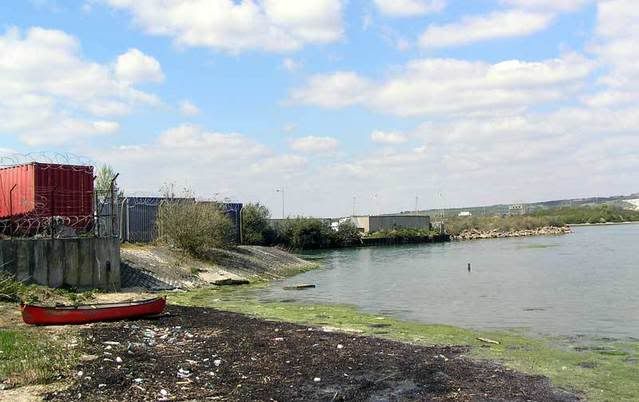
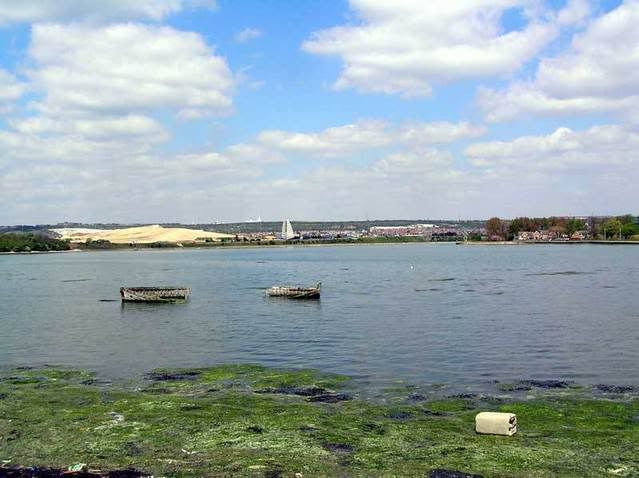






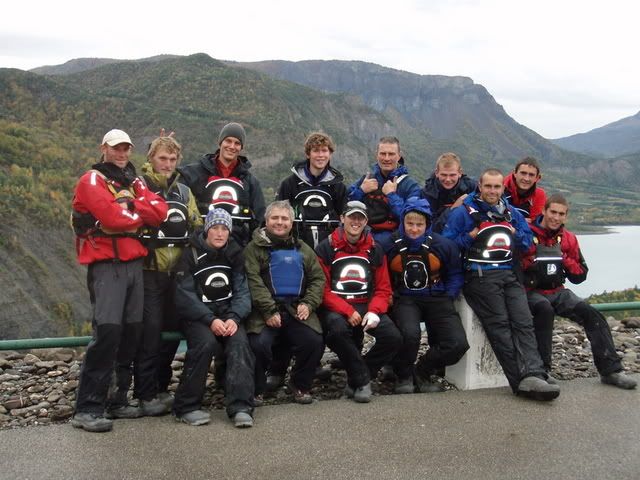
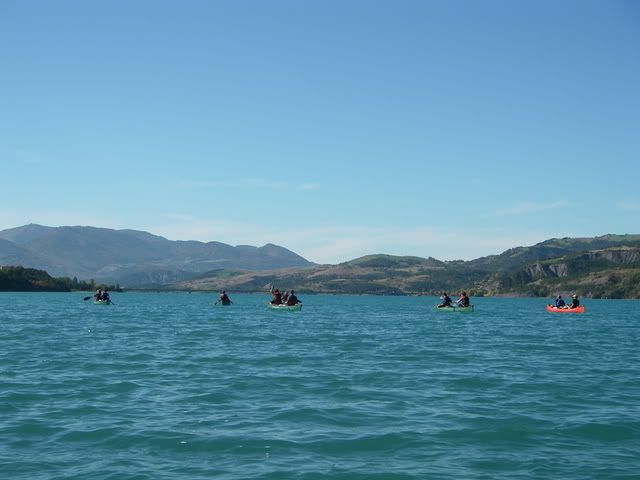
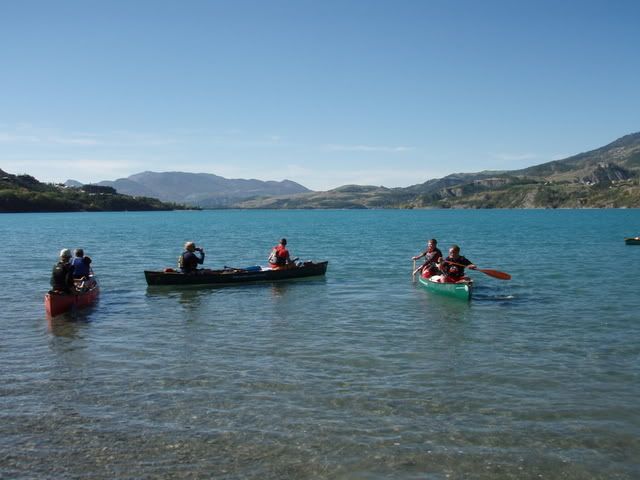
Bicton College ITC Expedition to Lac du Serre Poncon.
I was asked by Matt Blue the course director to come out to southern France for a spot of paddling and bushcraft. The ITC program is possibly the premier adventure activity instructors course in the country. The canoe kayak module is 6 weeks of hard skills training in the Cote du Rhone region. This gives a fantastic variety of rivers to choose from such as the Ardeche.
I met up with the group at the NST centre on the banks of the Cez river. A fantastic location surrounded by vineyards and limestone crags. The students were out when I arrived on a caving trip so I amused myself with a walk along the river. The Cez is a great flat-water river suitable for beginners to practise skills. I saw a lot of wildlife almost immediately. An adder slithered quietly away as I approached and there were plenty of tracks of boar and deer. This is hunting season and a group of hunters were out with their hounds. The bells around the dog’s necks were very reminiscent of alpine cowbells. I never heard a shot fired as the hunters later retrieved the dogs and left the wooded riverbank. Autumn has not yet reached this far south, as there were plenty of wild flowers still in bloom adding a sweet scent to the air. I was pleased to be able to recognise a wide range of plants and trees as I had not visited this part of the world before and was a little concerned that the flora and fauna would be more alien.
It was not long before the group arrived back from their caving adventure. I was introduced to the group and Matt’s assistant instructor Ollie.
The age range of the group was from 18 – 45. The evening was spent getting kick together for the 4 days we would spend in the French Alps. We had originally planned a trip on the Ardeche but the river had other ideas. So the groups trip to the alps was brought forward. I was able to borrow my paddling gear from the group as my baggage allowance was used with bushcraft gear.
The plan was to drive to Lac du Serre Poncon and then paddle to the bivvy site spent the next day with me teaching bushcraft skills followed by another 2 days of canoe skills on the lake.
he drive through the French countryside via Nyons to Gap was spectacular, really beautiful medieval villages, vineyards and fields of lavender and olive groves. We stopped at Decathlon for a spot of gear shopping. This was another first for me. Decathlons are large kit superstores. Almost every outdoor activity is catered for. Some of the kit was ridiculously cheap by UK standards. I managed to get out with only spending €90 on a pair of river shoes a thermal top and waterproof over trousers.
On arrival at the lake we were amazed at the colour of the water, a very deep blue. This is one special place to paddle and practice bushcraft skills. On arrival after a 3-hour drive we were hungry and eager to get on the water, We got the canoes off the trailer and ensured all our camping gear was leashed or lashed to the boats. I was paired up with Tom a very good strong paddler from Oz. We were to use a 16ft Prospector for the trip whilst the other students had Mad River explorers. I was a little nervous about the trip. Although the conditions were perfect blue skies little wind the 17 Km paddle to the bivvy site was the longest of my paddling career. I was aware that the rest of the group had had the benefit of Matt’s and Ollie’s expert tuition for the previous 3 weeks. The students on the ITC program were all fairly skilled paddlers with Little Al being a member of the junior team GB and sponsored by Peak.
After the shuttle was sorted and a fine lunch was consumed we were off. I was at the bow with Tom at the stern. We did a few exploratory circles near to the shore to check the trim of the boats and take a few photos before our small flotilla was off. It was not long before we were steadily paddling along the lake about 50m from the shore. I was surprised that our boat was making good time within the group. I had expected to be a slower as the least experienced on the water. We practiced different paddling formations as we made our way down the lake towards the road bridge. This was useful for me as the lesson was designed to show you were to pace your boat when leading groups of differing skills in a variety of conditions. It was not long before we were all moving through the pack like veterans. The long lake paddle was great for improving my forward paddle technique. After an hour or 2 of paddling you really need good trunk rotation. The hardest part of the trip at this stage was paddling towards the sun. Even with a decent pair of sunglasses it was hard not to be dazzled by the bright light. I had to remind myself that it was the middle of October.
The wind picked up as we paddled adding another element of fun some small waves to ride. It was good to use the bridge pillars to shelter from the wind. The rest of the paddle was a mixture of paddling and staring at the mountains whilst watching a buzzard soaring overhead.
We were extremely lucky that the lake water level was so high so we didn’t have to carry the canoes up the steep mud of the flooded valley sides to the beach. We simply beached the canoes emptied our kit and secured them on the beach. I was tired but satisfied that I had paddled twice as far as I had ever paddled before. Tom was a good companion in the canoe telling me about his climbing trips in Australia and his hopes for the future after the course was completed.
Matt had promised a Carlsberg bivvy. If Carlsberg made bivvy sites then this would be it. He was not wrong, a first class location over looking the lake. The site was Pine with a mixture of Juniper and Hawthorn. Within minutes the group had there tents up and Matt had a good-sized fire going in an established fireplace. The summer had not yet fully retreated so we had to be careful to ensure the fire was contained, as the whole hillside was tinder dry.
We past the evening swapping tales of our adventures. Ollie is a profession raft guide amongst his various talents and made white water rafting in Morocco sound very appealing.
I pitched my Arktis hopped bivvy as the darkness drew in. This was to be my first extended trip using it. It performed OK. I found the zip a tad frustrating. It would catch on closing requiring both hands to tease it open or closed. The mozzie net zips needs some more thought too. I had a pretty good nights sleep in the bivvy although my Thermarest decided to spring a leak so I woke up every couple of hours cold and needed to blow it up again. The bivvy was a snug fit but had enough spare room for my immediate kit. My 1 season Rab bag was more than warm enough during the night although at times I did notice a chill. In the bivvy a bag with a zip would have made getting in and out the bag easier. As a lightweight low bulk sleep system for 3 nights though it would work out fine.
I was up early for breakfast and a quick wander around the site to see what resources were available or the bushcraft lesions I was about to deliver. I was a little nervous about teaching this group. Two level 4 coaches and the rest trainee instructors. They would be watching my teaching style very closely.
First lesion was cutting tools. It was good to rebuild some self-esteem after the previous days paddle. The group make paddling look so effortless. Now it was my turn to watch them learn new skills. The local pine must be some of the hardest wood in existence as it proved very hard work to split. The group did exceptionally well picking up new skills very quickly. It is so rewarding watching people eager to learn and take on board advice. After a well earnt lunch it was fire craft. The group wanted to learn how to make there own bow drill sets from the local materials. This was pretty difficult as there wasn’t too much to choose from.
After much effort carving through very tough wood Tom got an ember and then produced fire using Rich59‘s damp tinder method.
The lake is one of the most beautiful places I have had the pleasure of teaching bushcraft to date. After some discussion Matt decided to change the program and asked if I would teach a second day of bushcraft. That evening the group nursed sore hands from a day of woodcarving and bow drilling by asking me to show them how to carve a spoon. What a fantastic way to spend a day in the alps watching the sun dip below the mountains with a pine needle tea chatting with new friends whittling spoons.
Wednesday saw us all up bright and early t catch the sun rise over the lake. The air was crisp and no a ripple disturbed the surface of the lake. Matt and Ollie had already been out trying to catch a fish or 2 for breakfast. Alas our fishing kit towed behind the canoe proved inadequate for the task. It was Colin’s 21st birthday. Wow what a location to celebrate ones birthday. Today the group wanted to build shelters and learn about wild foods. It was a little difficult to get the group to realise that shelter building here was going to be tough and we needed to be careful to keep our impact on the site as low as possible. Once they started though the ITC once again rose to the challenge and created some fine structures from very little materials. We chose to build a variety of shelters from a mixture of materials. The debris shelters proved most popular amongst the group. The forecast was for rain arriving in mid afternoon so the race was on to make a decent shelter before the rain arrived. There was a lot of deadwood available for the shelter frames. Thatch was another question. There would have been far too much damage to the site for every team member to thatch their own shelter from natural materials so we chose the best examples to cover with a mixture of pine bows.
That evening Ollie decided that Colin’s birthday should be marked in style. He set to making one of the best cakes I have eaten on or off the hill using his Dutch oven.
I would love to see what delights he provides his clients on day 7 of a 10-day trip on the Zambezi. That trip to Morocco is looking more likely. I just have to work out how to tell my wife that is an essential part of my professional development and all true bushcraft instructors have pictures of rafting trips on their websites.
Sadly all too soon it was time to say goodbye to our campsite and load the canoes. The weather had taken a turn for the worse but those in their shelters stayed pretty dry despite the 8 hours of heavy rain. We sourced some pine boughs to lash to the canoes to build rafts. Matt explained the benefits of various raft configurations. I never realised there were that many ways to lash 2 canoes. We also used our canoe poles to create a simple frame for sailing, as the wind in the centre of the lake seemed promising. Once out into the lake the wind helpful as ever decided to switch direction and blow into our faces. Oh well so much for sailing our canoes. We paddled the rafts along the lake to the barrage. A very large hydroelectric dam. We had considered a portage down the dam to the lake and river below. I was very relieved when Matt had announced the previous evening that we would not be attempting the portage as the river beyond the dams flow was diverted into a 30 Km tunnel. I think I would have died attempting to carry all our kit to the river.
The wind now had picked up to a good force 4-5 with plenty of white caps on the lake surface. Launching the rafts into the breaking waves from the beach required a pretty quick launch bobsleigh style, great fun. The next 7km of open water paddling was the hardest paddling I have attempted. Strong winds created some impressive waves. If anyone on the raft stopped paddling to bail then forward progress almost ceased. Every wave brought some water into the canoe so we needed to frequently bail. Then another large wave and the prospectors bow would plough deep into the oncoming wave filling the boat once more. It was great to see each raft working as a team keeping a careful paddling rhythm to get the most out of the rafts performance. Matt and Ollie’s prospector darted between the 3 rafts offering encouragement and practical advice. It was awesome to watch them move their boat through the waves with an effortless grace. One day I may be able to paddle half as well as these 2.
I would like to thank Matt and Ollie for the privilege of joining the ITC trip to Serre Poncon.
I can’t wait until next year.

