Tuesday, March 01, 2016

Neanderthals used simple Chemistry.

It's about time that we jettisoned the idea that our ancestors were inferior and that all that went before was simple and lacked sophistication. 

Anyone involved in studying primitive skills and living history knows that life was anything but simple and complex tasks require a lot of attention to detail. 

Here is a link to an interesting article. 


Thursday, November 12, 2015

Web Site Updates


Some of the more astute followers of Forest Knights over the years may have noticed that I have had a love hate relationship with our web site,  In the early days I was terribly proud of our shop window to the world and lavished time and money on it.

We then had a series of set backs with the site being hacked and our google ranking taking serious hit when I was leading an expedition in Canada.  The software we were using at the time was not as simple to up date as I would have liked.  Each process took a long time to achieve and the results were not always as I would have wished them.  Therefore things didn't get done and our ranking slid further.

This was not a huge concern as SEO is still pretty much a dark art that I do not understand and we have a good reputation within the industry and Forest Knights provides a great product so we get repeat business.

That said I should spend a lot more time and effort on marketing it is no good being a really great instructor if no one knows you exist.  After years of ridicule from my instructor team and my ever patient website guru Chris I have been making an effort to keep the web site up to date and looking fresh.  Also I am trying to keep the blog moving forward.

Small business always has the dilemma of chasing new business or servicing the work they have now to the best of their ability.  Its a challenge when coming home from 7 nights in the woods to fire up the laptop and up load pictures etc.

I have been asked to write more articles and tutorials for publication and my book is still in its infancy.  The Bushcraft Gourmet Guide will eventually be finished but I cannot promise when.  Despite the distractions of the woods calling me and the beauty of the Sussex Downs a stones throw a way I shall endeavour to spend more time working inside writing reviews and keeping the website up to date.  When I was training in Japan I was chatting to one of the Japanese instructors about business and the martial arts, He believes that to be a truly great warrior, Budo should include every sphere of one's life and should not be confined to the dojo or combat and it was not enough to be a great fighter if you could not support your family financially.  To put it into context with the great outdoors there is little point in investing hundreds of hours in a skill such as flint knapping and primitive skills only to discover that you have to work 2 shifts so never the time or the money to enjoy those hard won skills.

Bushcraft and survival practice teaches us that the mastery of time is so important.  The knowledge and wisdom of knowing when to slow down and move with natures cycles and when the move fast and act quickly and decisively are equally important to ones continued survival.

So the next time I hear the canoe calling I will stop and check if I have done all I can to be as balanced as possible.


Tuesday, November 10, 2015

Bhutanese Bow Making.

Last Sunday we spent the day teaching people how to make beautiful bows out of bamboo.

The adults wanted to craft Bhutanese Bows. Which are two bamboo limbs joined through the handle. The 3 younger guests choose to make more portable mini bows. 


Tom using a draw knife to shape the limbs. 

All the skills required to make a long bow are the same for making a bamboo mini bow. You shape the wood with an axe, drawknife, spokeshave, rasp and scraper. The bow is then tillered to ensure it is bending evenly with  no weaknesses in the limbs that might cause it to fail. 


Each new bowyer left with and shooting bow and a string they had made themselves. Not bad for a day's work. 

For more info on our 1 day courses. 

Thursday, November 05, 2015

50 Years of SARDA.

Forest Knights is proud to support SARDA.  We are hopeing that Bramble and Aspen our Bushcraft hounds will one day become search dogs.
They are doing well in their scent class.
Bramble
Aspen and Bramble Training


/
sarda

Tuesday, November 03, 2015

Mini Bow Making 1 Day Courses 2016

Here are our days for for the 1 day Bow Making Courses for 2016. Our 1 day courses working large bamboo is a great introduction to bow making for those that cannot commit to our full 3 day course. It is also great for out younger guests. Check out our Web site Here

Friday, August 07, 2015

Bushmoot

This week has been rather busy writing articles for our friends at Bushcraft UK and doing some CPD for our instructors. We also did some fire lighting with 80 Autistic Children.


 Sadly no photos to share for child protection reasons. Beth Senior minion first class practising her feather sticks.

Monday, August 03, 2015

Staff fighting at the moot

After much badgering I was persuadedto run a staff fighting beginners workshop. 

Turned out to be fun. 

http://www.youtube.com/watch?v=G01ZS7bvBVY&sns=em

Tuesday, April 28, 2015

Intelligent Bird

This is a great clip showing intelligent bird behaviour.  The joy of bushcraft and nature awareness is our ability get close to the action without causing disruption to the worlds wild places. 


Bird catches a fish using bait in an intelligent way

Bird catches a fish using bait in an intelligent way #Bird #Amazing #intelligent #Fish #bait #BVCVisit us www.BVCNetwork.com

Posted by BVC Network on Friday, 2 May 2014

Tuesday, March 24, 2015

Can't see the Bows for the Trees.

There is always plenty to do maintaining our woodland base.  Today though we had more ambitious plans.  The up coming Bow Making courses require a lot of fresh Ash Trees for our students to craft their own bows.

We would love for them to be able to fell their own tree to really understand the entire process of crafting a Primitive Bow from tree to shooter, however tree felling is potentially dangerous and an entire course in itself.

Whilst we try to do as much as possible from first principles sometimes a little modern technology gets the job done.

Sadly I didn't get any shots of the trees coming down as I was too busy using the chainsaw.
Stihl MS261 Chainsaw


The Ash trees ideal for bow making in our experience are around 6-10 in diameter. 
Forest Knights are very fortunate to have 250 acres of woodland to practice bushcraft and remove some fire wood.

David contemplating carrying the logs out the woods.


We prefer to source our wood from the national trust and the local forestry commission rather than remove trees from our woodland unless absolutely necessary for safety or conservation.


Some of our wood  stored at Amberley ready for the next few courses.


Whilst we were feeling particularly productive at the museum we decided it would be a good time to start on a new wood rack.


Our new wood rack in progress.  The posts are in just the cross beams to add.  We haven't decided if this rack is going to have a roof. We filled it should hold a cord of wood or approx 4000kg so needs to be robust.  


As you would expect after we had finished in the woods there was little trace of our activities.

Details of our 3 day Flat Bow Making Course in Sussex

Friday, March 20, 2015

Warrior Arts.

Warrior Arts.


Why is Forest Knights tag line Wilderness, Wildlife and Warrior Arts?


Forest Knights was asked to travel to Cheltenham to teach a group of 20 young people self defence.

We feel that having a good knowledge of self defence principles buildings self confidence and enables young people to make wiser choices about the people they associate with etc. This knowledge gives them sense of pride and self control.

Knowing when to react and how to deal with a potentially life threatening situation is an essential life skill, the ability to defend your self not only enhances your self worth but gives you a sense of responsibility.  All power is a double edged sword and the ability to cause discomfort to others must be used wisely.

The course was structured to focus on the principles of movement timing and balance.  It was important to instil a high moral compass to ensure that the young people understand that using the skills taught were for a very limited number of situations, 99.99% of the time it is wrong to harm anyone.  Much better to walk away and avoid conflict.  If someone is being abusive and a bully allow them their space and maybe over time you may show them that they were wrong.  Lead by example and try to be a positive influence on those around you.  If you are being robbed and you are certain that the thief is only interested in your possessions then let them have them.  All objects can be replaced.  Phones can be blocked and traced, your photos recovered from the cloud.  Hardly worth a potential conflict for a phone you're likely to upgrade soon.


When is it right to fight?


In our experience the only time it is right to fight is to protect yourself or those you care for from physical harm.  Being a pain in the rear is not sufficient a reason to harm someone and will undoubtedly cause the authorities to take a very dim view of your behaviour.  In other words you're the one likely to end up with a criminal record.  Bye bye DBS and your career choices.

So now you have considered when it's necessary to act you are free from making that decision when the time comes.  Now when  a person invades your personal space you can move instantly from a passive response to actively defending yourself.

Once the decision is made there is no turning back.  There is little middle ground in a real life threatening situation.  The real world is an ugly place and violence is painful and brutal.  It is much more productive spending 30 years learning to paint than 30 years practising martial arts.

However should you need those skills that 1 minute of time will be the 1 minute that defines your future.  Act swiftly and decisively.  Keep your techniques simple and effective.  Forget the movies.  In real life when you're tired and afraid perfection goes out of the window.

We worked with the young people on the Principle of  Move Pain Go.


Move.

Avoidance.  Move into safe space away from the threat.  This can be away from the attacker or in close and personal. We worked on how to avoid getting hit by movement of the whole body especially the feet. 

Pain.

All counters should give the attacker or attackers some form of stimulus to engage their brain. To interrupt their flow and create doubt.  This will give you the time and space to go. Only do what it necessary and keep it simple.  Economical violence.

Go  

The next and most important part is to leave at the earliest opportunity.  Once you have disabled your attacker and created space to move then go.   Get away from the conflict and seek help from the emergency services or a responsible adult.  Never wait for applause or support.  Move on with your life do not give that minute any more power over you than necessary.  Once you are safe you can call the police and report the incident. 

The young people really enjoyed the various situations, we had them working hard sparring with plastic bottles to defending against multiple attackers.  There was little need to give them specific techniques for they would be unlikely to remember then in 6 months in a pressure situation.  However we worked on simple movement that began to develop muscle memory and a heightened situational awareness.  Getting them to read a situation before it becomes a crisis is far better.


Prevention is better than cure.


Once they stopped falling over their own feet we could add a few extra tools to their armoury.  How to punch and block effectively using the whole body.  Understanding that their likely opponents may well have studied mixed martial arts and try to take them to the ground.  We worked on simple counters.

To finish we had a question and answer session with the young people discussing the issues they faced and feared and how we could develop stratagems to avoid problems in the future.

As always we learn as much from our students as they learn from us and it was a privilege to help them feel a little safer in their everyday lives.  Whilst the likelihood of facing a potential abduction is low understanding that you never get into the car is important.  Fight tooth and nail to avoid getting into the vehicle make yourself too inconvenient a  target as possible.  Anything to get you noticed and slow an attacker down and give you a chance to flee.  Once in a car the search area for the authorities looking for you increases dramatically and your changes of escape are reduced.


Forest Knights believe knowledge is power and with the application of knowledge and a positive attitude then any situation should be managable.  Having a sound knowledge of Bushcraft and Survival is a great foundation but to be truely prepared one must also have a solid understanding of human behaviour and be able act effectively in a crisis. 


Forest Knights instructors run training courses in self defence, conflict resolution and can provide training solutions for all your travel needs into hostile environments.


Contact us for bespoke courses to meet your organisations needs.

Friday, March 06, 2015

Lathe Restoration

Forest Knights is more than just another Bushcraft and First Aid School.  I like to try and keep as many traditional skills alive as possible from Greenwood working and Flint Knapping to Canoe and Coracle building.
Several of our instructors are pretty good at using a pole lathe and we run courses from time to time on Pole Lathe construction and Bodging.  

Joel removing the surface rust.
Beth our latest recruit is a rather talented power lathe turner.  She turns some amazing bowls and goblets etc.  That can be purchased at various shows.

So not to be outdone the chaps have all gone and got themselves a power lathe.  Nothing like a little competition to inspire one.

Not that any of us are going to become as good as Beth any time soon.

Joel was lucky enough to be able to collect his deceased grandfathers lathe.  We spent the day giving it some tender loving care.

For the tool enthusiasts it is a Tyme Cub manufactured from the 1960's until 1990s.

The bed is much longer than my own hobby lathe and should be great for turning legs for our show shave horses.
Checking the motor.

Check out the craft section of our website for a selection of our bowls and hand carved spoons etc

If you do not see anything you like.  The team accept commissions and will be adding more stock as time allows.


Casualties Galore

First Aid at Work.

Last weekend saw us in Kent teaching canoe coaches outdoor first aid.  This week we had a change of venue and style teaching a First Aid at Work Course for our Friends at Regis Gymnastics.

With the Canoe coaches we were able to be quite adventurous and have plenty of debate.  There are few absolutes in the world of first aid.  My favourite answer to a students question is 'that depends'.  every situation is unique and everyone is an individual, that's what Trauma care such a fascinating subject.
Bandaging a twisted ankle.

Our FAW work courses are still based on our experience of practical patient care but one has to work within the health and safety policies of the organisation you are working for.  Also an ambulance is a few minutes away so there is little need to get too creative.  Our responsibility as a First Aider is primarily to do no harm and to support a casualty until help arrives. 


This could be little more than staying calm and offering support waiting for the ambulance or it could involve performing extended CPR until help arrives.

 
CPR practice.

The key to first aid in the work place is to stay calm.  Keep it simple and get help as soon as possible.  This will give the casualty the best chance of making a full recovery.

The first rule is Do Not Become A Casualty Yourself,

The real world is seldom like the television,  Some beautiful blonde is unlikely to collapse in front of you on her back in an ideal location requiring a few chest compressions before making a spontaneous recovery.  The real world is far less exciting and much more traumatic people have accidents when the weathers cold and wet and you are fed up tired and late for an appointment.  


So how to condense 3 days of training into something useful that you might use to save a life,

That's pretty simple really.  

Consider Airway Airway Airway..  If you casualty cannot maintain their airway because they are unconscious  then they will stop breathing and die.  Simple.

Once you have checked your casualty is unresponsive and not just asleep at their desk.  You need to open their airway.  Simply tilt there head back gently using slight pressure on their chin and forehead,
Don't pull back too far especially in an infant or you will hyper extend the neck and potentially block the airway again.

Once they have an Airway you can check if they are breathing.  Get your face right down to their mouth.  Look at the chest.  Is it rising and falling can you hear their breathing or feel it on your cheek.  If the answer is no or they are not breathing normally then immediately call an ambulance and begin Chest Compressions.

Vinne Jones says it all.


Tuesday, March 03, 2015

Tonbridge Canoe Club First Aid Course.

 Tonbridge Canoe Club First Aid Course.

Once again the Forest Knights team headed over to Kent to run a First Aid Course for our friends at Tonbridge Canoe Club. We have been training their canoe coaches for a number of years.  It's always great fun to train like minded enthusiastic students that really enjoy learning new skills and who may put those skills into practice effectively should they ever be needed.
We had a full course of 12 students and 2 staff to keep them on their toes with a range of increasingly complex scenarios. 
Beth receiving treatment. In the morning it's always good to benchmark the skills of students with a nice simple casualty. In this case Beth is a walker that has slipped on the wet grass and inadvertently twisted her ankle.  
What would you do if one of your party injures herself whilst out walking?  How should you react?  There are very few absolutes in the outdoors and a lot will depend on your location and the conditions you are faced with.  
In this case the weather whilst cold and damp is not particularly challenging.  The ambulance response time is going to be pretty quick if Beth's condition worsens.  What equipment are you carrying to help you.  You should always have a First Aid Kit for example.
I carry a Sam Splint in my day pack and the Evac Pack Field Kit.
The groups first priority is to do a proper assessment of the situation and then make the best decisions possibly to ensure the safety of everyone in the group including the casualty and rescuers.
The first rule of First Aid is do not become a casualty yourself.
It is all too easy to want to rush in and start treating a casualty before you have done a proper risk assessment of the situation.  
Is it safe for the rescuers to approach?
Can I safely offer any useful assistance?
Your best course of action maybe just to let the victim know you are there and you will go for help. Remember mobile phones may not have a signal and you may have to travel some distance to contact the emergency services.
In this case the injury is not life threatening and at first glance should be simple to self rescue.  We need to consider how we are going to evacuate the casualty and how long that will take consultation with the emergency services. 
Remember our role as first aiders is to treat our casualties and to prevent harm whilst ideally transferring them to the hands of the emergency services as soon as is practical. It is terribly lonely treating a seriously ill person waiting to hear the sound of the ambulance approaching. 5 minutes feels like an hour and remember response times in more remote locations can sometimes be measured in hours.
Back to Beth.  She looks happy enough for someone with a badly twisted ankle.  It's the end of February and we are in the outdoors so we must consider that Beth is suffering from Hypothermia, Hypoglycaemia and dehydration.  All outdoor casualty's must be treated for these conditions.  The group have quickly got Beth onto a mat to stop heat loss from the ground and wrapped a spare jacket around her shoulders.
Never give a casualty your personal kit.
Spare group clothing is fine but remember the first rule and do not become a casualty yourself. It would have been nice to have given Beth a spare hat and perhaps got her into a Bothy bag whilst the first aider on scene did a proper assessment of her injuries and the group leader formed an action plan.
What other considerations are there for the leader?  
Once it is determined that her only injury is a twisted ankle and this wasn't caused by some other underlying issues.  The group leader determined it was safe for Beth to be supported and self rescue was appropriate.
As the day progresses the casualty injuries become more complex and the number of causalities increases to ensure all members of the course are challenged and given an opportunity to practice not only their first aid skills but also consider issues of communication and leadership.
It's easy to become too focussed on the problem before you and to lose sight of the bigger picture.
Forest Knights Chief Instructor playing the role of a casualty with a suspected neck injury.
 This picture shows our chief Instructor playing the role of a casualty fallen out of a tree wedged between the two of the willows trunks.  Complaining of headache, back pain and having difficulty breathing. This is was the least accessible location for me to be in a depression on the river bank amongst brambles in the mud.  Typical of the the banks of the Medway.
You're paddling the river with a group of friends and you hear my cry for help what would you do?
Keep it simple.  
Once again the first rule applies do not become a casualty yourself. 
Once its safe to approach and you know there is no risk from the river or from falling branches I may have dislodged in my fall we need to do a quality rapid assessment of the casualties medical needs. A thorough examination of the injuries and a good medical history needs to be taken in case the casualty loses consciousness.  My signs and symptoms are pretty clear. I have fallen out of a tree whilst searching for eggs. I have banged my head on the way down injured my chest and have an odd numb sensation in my left leg.  I am otherwise physically healthy but I have recently stopped taking Amisulpride.
The mechanism of injury suggests that the casualty is likely to have suffered a possible head and spinal injury.  The examination has determined that there is a large bump on the back of the head some discomfort in the chest and loss of sensation in the lower limb.  Ideally one would choose to keep the casualty calm offer lots of TLC and await for the emergency services to arrive.  On an outdoor first aid course life is never that simple and casualty's breathing is becoming more laboured and his pulse is becoming much faster.  The outcome is looking bleak.  The options are discussed amongst the rescuers. Life over limb, the chest injury is more severe that first thought and they may need to perform CPR. The casualty's level of conscious is decreasing I am unable to communicate. The decision is made to move the casualty to place of safety where CPR etc can be safely administered.
This was just one of the casualties being treated at the time.  Checking the ankleThere was a crush injury whilst someone was trying to lift a heavy kayak onto a high rack and another woman running for help had fallen over and gashed her scalp.
We had a blast demonstrating a range of first aid skills and there was lots of discussion on the right and wrongs of one particular treatment over another.  Our roles as coaches is to enable our students to learn and retain as much information as possible but also to give the the skills and confidence to apply their knowledge and equally important to understand the limitations of their training and know when its better to stand back and wait for the professionals.
Course Content.
First Aid in the Outdoors
Responsibilities of the First Aider FPOS.
Action in an Emergency
Scene Management
Triage.
Communications.
Primary Assessment
Secondary Assessment
Casualty Care. Movement and handling.
Breathing & Circulation
Principals of Resuscitation
Hypoxia (wilderness setting)Airway Obstruction
Removal of helmets
Disorders of Circulation
Shock recognition and treatment
Wounds & Bleeding
Techniques
Diabetes.
Effects of Heat & Cold
Chest Trauma.
Fractures & Spinal injuries
Poisoning
Incident Management
Foreign Bodies
Evacuation Incident Management
Burns & Scalds.
CPR Practice
We look forward to returning next year.


Sunday, November 13, 2011

Wood Spirit

Having decided that this Christmas would be as Eco friendly and sustainable as possible I am making all my Christmas presents and decorations for friends and family.

Whilst an easy decision to make it's hardly the most time efficient to hard craft every gift where possible. A quick click on the Internet and a present arrives through the post would have been so much easier but much less personal.

Let's hope the recipients of my labour appreciate their craft items are lovingly made and are unique.

Spent yesterday learning how to carve with an Arbortech. Great for big projects today we will be carving using just hand tools.

Tuesday, May 17, 2011

Amberley

Great day at Amberley museum demonstrating traditional skills.  Today we were demonstrating the ancient art of Bodging.  Pole lathe turning to make  chair legs and other useful items.

I made a Dibber and a Spurtle.  Nothing fancy just simple shapes to keep the public amused and try and increase their understanding of Greenwood working.  I also got to spend a bit of time working my Yew long Bow.  No sooner had I started on it when I was called away to look at a tree that was in danger of falling down onto the cabin that serves as the Amberley bric a brac shop.

It was a Sallow with a rather nasty crack running along the main trunk.  A small gust of wind would have had it falling onto a visitor.  So it needed immediate attention.  I did have a chainsaw handy and I am not certified anyway.  I am rather used to Tree felling with an axe though.  Some out came my large Cegga axe.  A few  it swings to create a bite and then a trusty bow saw to make sure I missed the public and the shop and it was on the ground.  Shame to see trees chopped but this one was rotten and posed a danger.

I will turn some of the wood into bow drill sets and carve a few spoons.  The rest will either become a part oaf the dead hedge or be stacked to become charcoal later this year.

Tomorrow I am demonstrating Outdoor Cooking Skills so we needed to do some foraging.  We collected Beech, Hawthorn, and Hazel leaves for a pate.  Burdock and Dandelion for roasting to make a cordial.  Wild strawberry and blackberry leaves plus stinging nettle.  I have plenty of leaves.

What about the dead things I hear you cry.  Well I have decided to cook a joint of Beef coated in sea salt in the Dutch oven.

Saturday, February 19, 2011

Slipping and Sliding

Another fine day in the beautiful Sussex countryside. Today I was instructing Skid Control at Goodwood for our friends at www.Skidcontrol.co.uk The circuit was busy with motor sport enthusiasts taking advantage of the damp conditions to test their skills in some rather nice classic race cars. A little beyond the spending power of a humble Bushcraft instructor. Although great to watch the raw power of these classic beasts pushed hard on a real drivers circuit like Goodwood.

Skid Control have developed a range of anti skid courses that cater for all drivers needs that really focus on driver awareness. It is no good knowing the techniques of control if you're unaware you're in potential peril so we focus a lot on sensing what the car is doing and learning to make small adjustments to maintain friction with the road surface.

Not only is a skid control a really valuable investment to develop skills that keep you safer on the roads its actually rather good fun. Our customers range from those that have been involved in some rather traumatic experiences and need to rebuild their confidence behind the wheel to competitive drivers looking to drift with grace and style.

The joy of instructing at Goodwood is not only the people that one meets but the beautiful and historic setting. We get to observe loads of wildlife that enjoy the countryside from Buzzards and Skylarks to some rare butterflies. Although today most of the birds were sheltering from the rain we heard Chiff Chafs, Blackbirds, Thrushes, Blue and Great Tits plusa few calls I didn't recognise.

One of my 2011 goals is to improve my birdsong recognition. The more one learns about the world the more we understand how little we actually know. Questions only lead to more questions and a greater thirst for knowledge.

Douglas Bader the Spitfire ace made famous in the film 'Reach for the Sky' flew from here. A statue of the great man is situated outside the Areo Club. The other problem working regularly next to a flying school is my growing desire to get my pilots license. No real reason to apart from the challenge.

Once the training was complete we headed to Hayling Island to walk the dogs at the RSPB site along the beach at Langstone harbour. It was high tide so very few waders to be seen. I saw a couple of kayakers enjoying the water which made me wish I had loaded a canoe on the car for a quick paddle. Paddling along Hayling Island in Langstone and Chichester Harbours is one of my favourite paddles there is always something to see and the conditions change constantly keeping you on your toes.

Sunday, February 06, 2011

Greenwood Village

Forest Knights chief instructor and his merry band of helpers had a great weekend at Amberley Museum improving the Bow Making Workshop and generally getting ready for the new season at Amberley.

Our friend and colleague the Amberley Bodger was running an excellent introduction to Pole Lathe Turning Course. The new bodgers left with some very nice looking rolling pins and garden dippers.
More importantly they produced vast amounts of shavings for our kelly kettles.

Its a well know survival fact that man cannot cope without copious amounts of coffee.

We are really quite excited by the improvements we have made this winter to our teaching facility at Amberley. We now offer a wide range of courses aimed at people that may not want the full camping in the forest experience but still want to learn new skills. Our site is suitable for all ages and abilities and we encourage people with disabilities to get out and experience the great outdoors.

The Greenwood village at Amberley Museum offers good disabled access so we can ensure all our guests can learn new craft and bushcraft skills in a warm friendly atmosphere.

Our range of courses available at Amberley run from a 1 day introduction of Spoon carving through to a 4 Day Outdoor First Aid Course.

Thursday, April 19, 2007

Canoe Trip


The sun was bright this morning so after checking the tide times with easy tide

I decided to load up the trailer and head off. I had been meaning to paddle from Bosham near Chichester for some time. The cunning plan was to attend a meeting in Portsmouth and get back an hour before high tide an explore the area. However traffic conspired against me and by the time I was free it was almost high tide. So I thought I would put in at the slipway at Hilsea and paddle out to Langstone Harbour. I have never paddled along that route.

I arrived at the car park to find a height barrier. Oh how I hate height restrictions. A quick rethink and i'm driving to the Mountbatten Centre. Their car park has no height restrictions. The only problem here is that there is no channel so as the tide goes out you are left with a lot of thick black mud. Great for waders not so good for short people in trainers.


The put in is a bit scruffy but easy access from the car park.


I decided to head out to the main harbour with no real destination in mind.


I have often seen these beasts from the motorway but never close up. Probably still more MPG than my Deli.


Once past the M275 bridge it was really peaceful although the wind was stronger than expected.

I headed towards Portsmouth docks for a closer look at some of the ships.


A closer view of the Spinnaker tower. There were a lot more boat movements this end of the harbour so I had to concentrate on paddling and avoiding the wash.

I quickly got bored with looking at our industrial skyline and so turned across the harbour towards Porchester Castle.


The outer wall is Roman. I can't remember the date of the keep. It was used to house French prisoners of war.


I thought Wing might like a photo of the keep and I needed a caffine break if I was going to battle the tide back to the put in before I lost all water.


Landing stage and coffee stop with Vospers boat yard in the background. Sadly this slipway is private for Porchester Sailing Club only and I was scowled at by the locals.

I couldn't stop long as the tide was picking up and I had to head back with an increased sense of urgency.


Luckily I got back faster than I expected and had time to paddle over to this bit of art?


After some poling practice in the shallows I felt ready to face the traffic home. All in all a great afternoons paddle in near perfect conditions.

Monday, October 23, 2006

Bicton College Canoe Trip To the French Alps


Bicton College ITC Expedition to Lac du Serre Poncon.

I was asked by Matt Blue the course director to come out to southern France for a spot of paddling and bushcraft. The ITC program is possibly the premier adventure activity instructors course in the country. The canoe kayak module is 6 weeks of hard skills training in the Cote du Rhone region. This gives a fantastic variety of rivers to choose from such as the Ardeche.

I met up with the group at the NST centre on the banks of the Cez river. A fantastic location surrounded by vineyards and limestone crags. The students were out when I arrived on a caving trip so I amused myself with a walk along the river. The Cez is a great flat-water river suitable for beginners to practise skills. I saw a lot of wildlife almost immediately. An adder slithered quietly away as I approached and there were plenty of tracks of boar and deer. This is hunting season and a group of hunters were out with their hounds. The bells around the dog’s necks were very reminiscent of alpine cowbells. I never heard a shot fired as the hunters later retrieved the dogs and left the wooded riverbank. Autumn has not yet reached this far south, as there were plenty of wild flowers still in bloom adding a sweet scent to the air. I was pleased to be able to recognise a wide range of plants and trees as I had not visited this part of the world before and was a little concerned that the flora and fauna would be more alien.


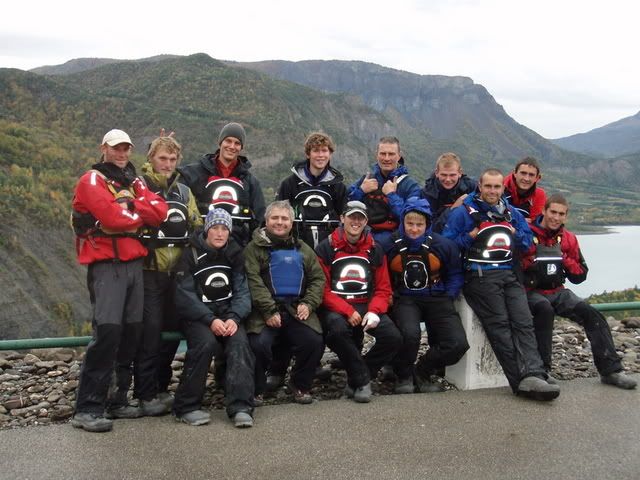
It was not long before the group arrived back from their caving adventure. I was introduced to the group and Matt’s assistant instructor Ollie.

The age range of the group was from 18 – 45. The evening was spent getting kick together for the 4 days we would spend in the French Alps. We had originally planned a trip on the Ardeche but the river had other ideas. So the groups trip to the alps was brought forward. I was able to borrow my paddling gear from the group as my baggage allowance was used with bushcraft gear.

The plan was to drive to Lac du Serre Poncon and then paddle to the bivvy site spent the next day with me teaching bushcraft skills followed by another 2 days of canoe skills on the lake.

he drive through the French countryside via Nyons to Gap was spectacular, really beautiful medieval villages, vineyards and fields of lavender and olive groves. We stopped at Decathlon for a spot of gear shopping. This was another first for me. Decathlons are large kit superstores. Almost every outdoor activity is catered for. Some of the kit was ridiculously cheap by UK standards. I managed to get out with only spending €90 on a pair of river shoes a thermal top and waterproof over trousers.


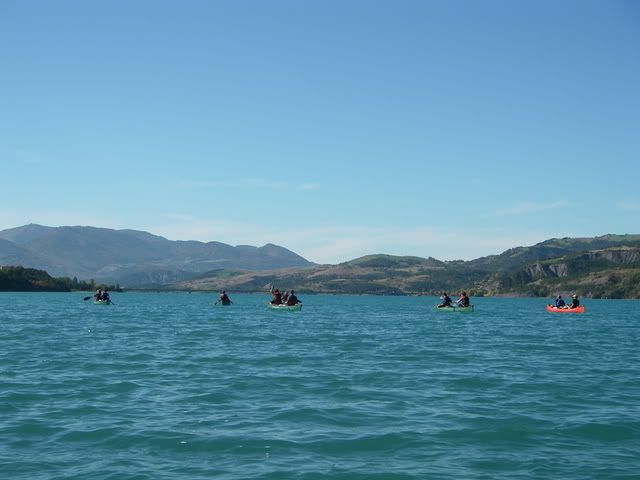
On arrival at the lake we were amazed at the colour of the water, a very deep blue. This is one special place to paddle and practice bushcraft skills. On arrival after a 3-hour drive we were hungry and eager to get on the water, We got the canoes off the trailer and ensured all our camping gear was leashed or lashed to the boats. I was paired up with Tom a very good strong paddler from Oz. We were to use a 16ft Prospector for the trip whilst the other students had Mad River explorers. I was a little nervous about the trip. Although the conditions were perfect blue skies little wind the 17 Km paddle to the bivvy site was the longest of my paddling career. I was aware that the rest of the group had had the benefit of Matt’s and Ollie’s expert tuition for the previous 3 weeks. The students on the ITC program were all fairly skilled paddlers with Little Al being a member of the junior team GB and sponsored by Peak.

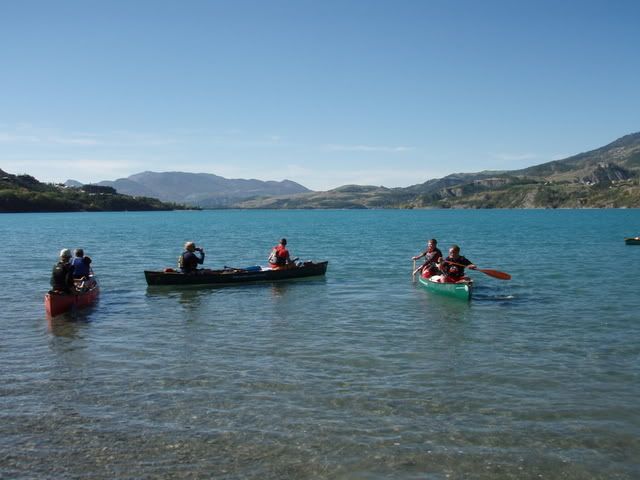
After the shuttle was sorted and a fine lunch was consumed we were off. I was at the bow with Tom at the stern. We did a few exploratory circles near to the shore to check the trim of the boats and take a few photos before our small flotilla was off. It was not long before we were steadily paddling along the lake about 50m from the shore. I was surprised that our boat was making good time within the group. I had expected to be a slower as the least experienced on the water. We practiced different paddling formations as we made our way down the lake towards the road bridge. This was useful for me as the lesson was designed to show you were to pace your boat when leading groups of differing skills in a variety of conditions. It was not long before we were all moving through the pack like veterans. The long lake paddle was great for improving my forward paddle technique. After an hour or 2 of paddling you really need good trunk rotation. The hardest part of the trip at this stage was paddling towards the sun. Even with a decent pair of sunglasses it was hard not to be dazzled by the bright light. I had to remind myself that it was the middle of October.

The wind picked up as we paddled adding another element of fun some small waves to ride. It was good to use the bridge pillars to shelter from the wind. The rest of the paddle was a mixture of paddling and staring at the mountains whilst watching a buzzard soaring overhead.

We were extremely lucky that the lake water level was so high so we didn’t have to carry the canoes up the steep mud of the flooded valley sides to the beach. We simply beached the canoes emptied our kit and secured them on the beach. I was tired but satisfied that I had paddled twice as far as I had ever paddled before. Tom was a good companion in the canoe telling me about his climbing trips in Australia and his hopes for the future after the course was completed.


Matt had promised a Carlsberg bivvy. If Carlsberg made bivvy sites then this would be it. He was not wrong, a first class location over looking the lake. The site was Pine with a mixture of Juniper and Hawthorn. Within minutes the group had there tents up and Matt had a good-sized fire going in an established fireplace. The summer had not yet fully retreated so we had to be careful to ensure the fire was contained, as the whole hillside was tinder dry.

We past the evening swapping tales of our adventures. Ollie is a profession raft guide amongst his various talents and made white water rafting in Morocco sound very appealing.

I pitched my Arktis hopped bivvy as the darkness drew in. This was to be my first extended trip using it. It performed OK. I found the zip a tad frustrating. It would catch on closing requiring both hands to tease it open or closed. The mozzie net zips needs some more thought too. I had a pretty good nights sleep in the bivvy although my Thermarest decided to spring a leak so I woke up every couple of hours cold and needed to blow it up again. The bivvy was a snug fit but had enough spare room for my immediate kit. My 1 season Rab bag was more than warm enough during the night although at times I did notice a chill. In the bivvy a bag with a zip would have made getting in and out the bag easier. As a lightweight low bulk sleep system for 3 nights though it would work out fine.

I was up early for breakfast and a quick wander around the site to see what resources were available or the bushcraft lesions I was about to deliver. I was a little nervous about teaching this group. Two level 4 coaches and the rest trainee instructors. They would be watching my teaching style very closely.

First lesion was cutting tools. It was good to rebuild some self-esteem after the previous days paddle. The group make paddling look so effortless. Now it was my turn to watch them learn new skills. The local pine must be some of the hardest wood in existence as it proved very hard work to split. The group did exceptionally well picking up new skills very quickly. It is so rewarding watching people eager to learn and take on board advice. After a well earnt lunch it was fire craft. The group wanted to learn how to make there own bow drill sets from the local materials. This was pretty difficult as there wasn’t too much to choose from.


After much effort carving through very tough wood Tom got an ember and then produced fire using Rich59‘s damp tinder method.

The lake is one of the most beautiful places I have had the pleasure of teaching bushcraft to date. After some discussion Matt decided to change the program and asked if I would teach a second day of bushcraft. That evening the group nursed sore hands from a day of woodcarving and bow drilling by asking me to show them how to carve a spoon. What a fantastic way to spend a day in the alps watching the sun dip below the mountains with a pine needle tea chatting with new friends whittling spoons.

Wednesday saw us all up bright and early t catch the sun rise over the lake. The air was crisp and no a ripple disturbed the surface of the lake. Matt and Ollie had already been out trying to catch a fish or 2 for breakfast. Alas our fishing kit towed behind the canoe proved inadequate for the task. It was Colin’s 21st birthday. Wow what a location to celebrate ones birthday. Today the group wanted to build shelters and learn about wild foods. It was a little difficult to get the group to realise that shelter building here was going to be tough and we needed to be careful to keep our impact on the site as low as possible. Once they started though the ITC once again rose to the challenge and created some fine structures from very little materials. We chose to build a variety of shelters from a mixture of materials. The debris shelters proved most popular amongst the group. The forecast was for rain arriving in mid afternoon so the race was on to make a decent shelter before the rain arrived. There was a lot of deadwood available for the shelter frames. Thatch was another question. There would have been far too much damage to the site for every team member to thatch their own shelter from natural materials so we chose the best examples to cover with a mixture of pine bows.

That evening Ollie decided that Colin’s birthday should be marked in style. He set to making one of the best cakes I have eaten on or off the hill using his Dutch oven.

I would love to see what delights he provides his clients on day 7 of a 10-day trip on the Zambezi. That trip to Morocco is looking more likely. I just have to work out how to tell my wife that is an essential part of my professional development and all true bushcraft instructors have pictures of rafting trips on their websites.

Sadly all too soon it was time to say goodbye to our campsite and load the canoes. The weather had taken a turn for the worse but those in their shelters stayed pretty dry despite the 8 hours of heavy rain. We sourced some pine boughs to lash to the canoes to build rafts. Matt explained the benefits of various raft configurations. I never realised there were that many ways to lash 2 canoes. We also used our canoe poles to create a simple frame for sailing, as the wind in the centre of the lake seemed promising. Once out into the lake the wind helpful as ever decided to switch direction and blow into our faces. Oh well so much for sailing our canoes. We paddled the rafts along the lake to the barrage. A very large hydroelectric dam. We had considered a portage down the dam to the lake and river below. I was very relieved when Matt had announced the previous evening that we would not be attempting the portage as the river beyond the dams flow was diverted into a 30 Km tunnel. I think I would have died attempting to carry all our kit to the river.

The wind now had picked up to a good force 4-5 with plenty of white caps on the lake surface. Launching the rafts into the breaking waves from the beach required a pretty quick launch bobsleigh style, great fun. The next 7km of open water paddling was the hardest paddling I have attempted. Strong winds created some impressive waves. If anyone on the raft stopped paddling to bail then forward progress almost ceased. Every wave brought some water into the canoe so we needed to frequently bail. Then another large wave and the prospectors bow would plough deep into the oncoming wave filling the boat once more. It was great to see each raft working as a team keeping a careful paddling rhythm to get the most out of the rafts performance. Matt and Ollie’s prospector darted between the 3 rafts offering encouragement and practical advice. It was awesome to watch them move their boat through the waves with an effortless grace. One day I may be able to paddle half as well as these 2.

I would like to thank Matt and Ollie for the privilege of joining the ITC trip to Serre Poncon.

I can’t wait until next year.